Competitive Decision Making in Dutch Auctions
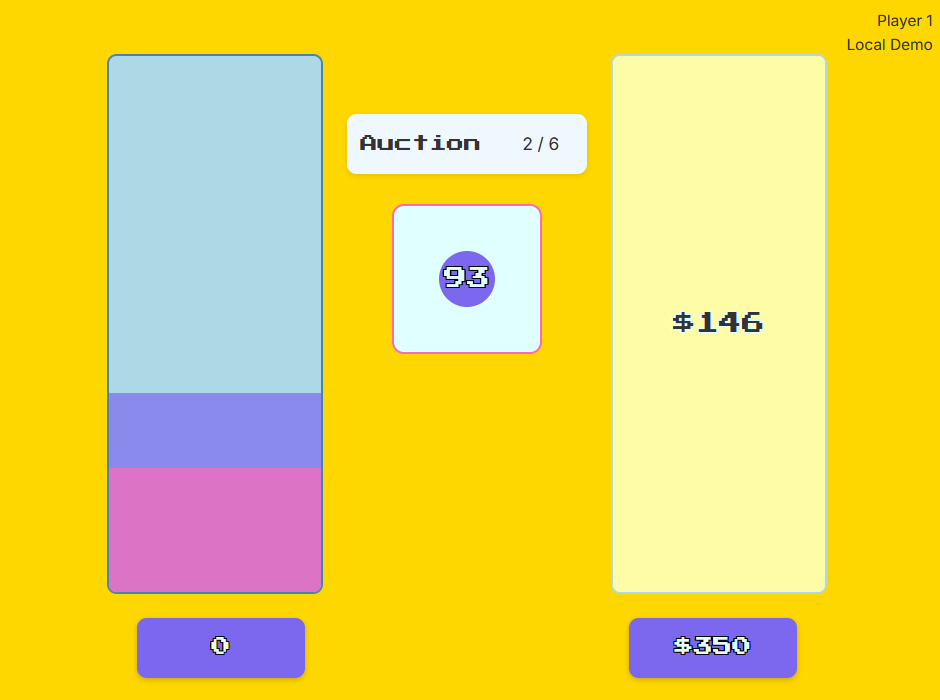
Group experiments test how a falling price shapes bidding; a preliminary prospect-theory model describes the decision to bid now or keep waiting.
Bid now or wait?
In a Dutch auction, the price falls until someone bids. Waiting can secure a lower price, but a competitor may act first. We used computerised auctions to study this trade-off in groups of three bidding with hypothetical funds.
Experiments and modelling
Rachel Mullard and I collected and analysed the data. I also prepared the figures and co-wrote the paper. The experiments varied the starting price, price-change pattern and available quantity. A preliminary extension of prospect theory treated bidding as a sequence of decisions about whether to act or wait.
Findings and limits
Higher starting prices were associated with higher winning bids. Price-change pattern and quantity volatility had little effect under the tested conditions. The model captured major qualitative patterns, providing a basis for further quantitative tests.
The findings describe controlled group decisions with hypothetical funds. They do not establish how much revenue a seller would gain in a real market.
Related Publications
- Bennett, M. S., Mullard, R., Adam, M. T., Steyvers, M., Brown, S. D., & Eidels, A. (2020). Going, going, gone: Competitive decision-making in Dutch auctions. Cognitive Research: Principles and Implications. DOI