Measuring Performance in Human and Human–Machine Teams
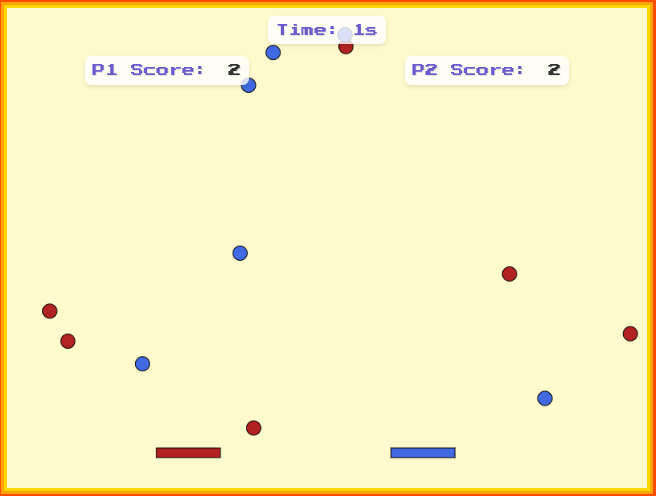
Workload-capacity analysis compares team performance with an independent-player benchmark, revealing coordination costs that raw scores can miss.
When does working together help?
A team can score more than an individual while still losing efficiency through coordination. My doctoral research examined that distinction in a paddle-and-ball task, comparing human pairs with human–machine teams under separate, collaborative and competitive instructions.
Measuring the cost of coordination
I first-authored this collaborative study, which applies workload-capacity analysis to the game. The benchmark asks how two independent players would perform together. Comparing observed performance with that benchmark distinguishes an increase in raw output from an increase in processing capacity.
What the experiments showed
Both kinds of team kept more balls in play than individuals, but fell below the independent-player benchmark. Collaboration reduced the capacity cost relative to competition most clearly for human pairs; that advantage was smaller with machine partners.
These findings concern the agents and task studied. They motivate further tests of how task structure and partner behaviour affect coordination, rather than a general rule that human or machine teammates are better.
Related Publications
- Bennett, M. S., Hedley, L. G., Love, J., Houpt, J. W., Brown, S. D., & Eidels, A. (2025). Human performance in competitive and collaborative human–machine teams. Topics in Cognitive Science. DOI
- Hedley, L. G., Bennett, M. S., Love, J., Houpt, J. W., Brown, S. D., & Eidels, A. (2023). The relationship between teaming behaviours and joint capacity of hybrid human-machine teams. Proceedings of the Annual Meeting of the Cognitive Science Society.